

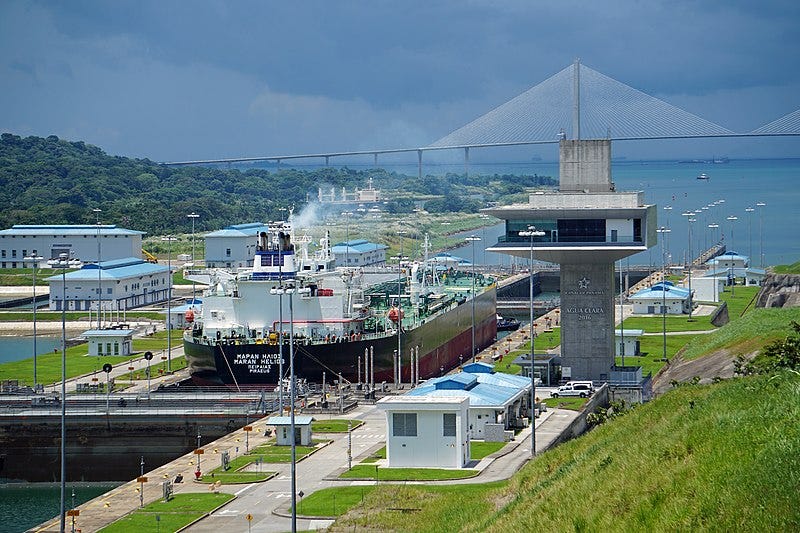
Ship passing through the new Agua Clara Locks, Panama Canal, by Mariordo (Mario Roberto Durán Ortiz), courtesy of Wikimedia Commons. This file is licensed under the Creative Commons Attribution-Share Alike 4.0 International license.
One of the difficulties encountered in dealing with global warming is convincing corporations to wean from their addiction to hydrocarbons. Those chemicals are responsible for the release of carbon dioxide and other greenhouse gases that trap heat in the atmosphere.
But if global warming hurts corporate pockets through increased operating expenses, or even through a loss of a competitive edge, could that sway the shipping moguls to change their ways?
Since its opening at the turn of the 19th Century, the Panama Canal has provided convenience in shipping goods between the Atlantic and the Pacific Oceans. There is a difference in ocean levels, and structures have been built to raise and lower the ships by raising and lowering the waters on which they navigate. These structures, “locks”, are filled and emptied from freshwater lakes that once held abundant water. But if there is a scarcity of water to operate the locks that allow ships to travel from one ocean to another, it becomes necessary to ration that water. And that has now occurred through drought exacerbated by global warming. The government of Panama has been forced to curtail the number of ships traversing the canal and that move impacts its revenue to the tune of tens of millions of USD. The number of ships also threatens the water supply of the country— a single ship has been estimated to consume as much freshwater as that used by half a million Panamanians each day.
When ships avoid the canal, they take longer voyages increasing shipping company operating costs and greenhouse house emissions, as the vessels are propelled by hydrocarbon fuels. Currently the number of ships traversing the canal daily has been reduced from as many as 38 to fewer than 30 under new limits being instituted. Also, there is now a reduction in vessel cargo so the ship drafts can be shallower and hence the vessels require less water to be floated through the locks.
There are workarounds to the shipping company dilemmas, but each is accompanied by billion-dollar infrastructure investments and long construction schedules.
To learn more, check out this article,
With these impacts targeting their pocketbooks, can we count on commerce and industry to change their ways? Can we finally come together to address the shared threat that global warming represents?
What do you think?

An interesting article and something I have not heard discussed before. Well stated.
Thanks Scott!